- Client
- CoinDesk (Consensus)
- Industry
- Crypto, blockchain & Web3
- Event
- Consensus Miami 2026
- Venue
- Miami Beach Convention Center
- Plan
- PRO · 93 booths · 18 meeting rooms
- Ordered via
- Brella (event platform partner)
- Event dates
- May 5–7, 2026
- Public map
- consensusmiami2026.expofp.com
- Scope
- Two-floor mapping · Exhibitor directory & search · Brella integration · Touchscreen kiosks · Sponsor visibility
Consensus is the most influential event in digital assets, finance, and technology. Every year it brings together founders, fund managers, regulators, and builders — the kind of event where the side conversations matter as much as the panels. In 2026 it landed in Miami Beach for the first time, bringing more than 15,000 attendees from 100+ countries to the Convention Center.
Getting that many people around a two-floor venue without confusion is its own logistics problem. CoinDesk, the organizer, needed a floor plan that was searchable, mobile-friendly, and embedded directly in the attendee experience — not a separate download, not a printed map. The order came through Brella, ExpoFP's event platform partner. Here's how it went.
The challenge: venue navigation at Miami Beach Convention Center
At an event where networking and deal flow drive the agenda, time spent searching for the right booth or meeting room is time not spent doing business. The floor plan needed to reduce that friction.
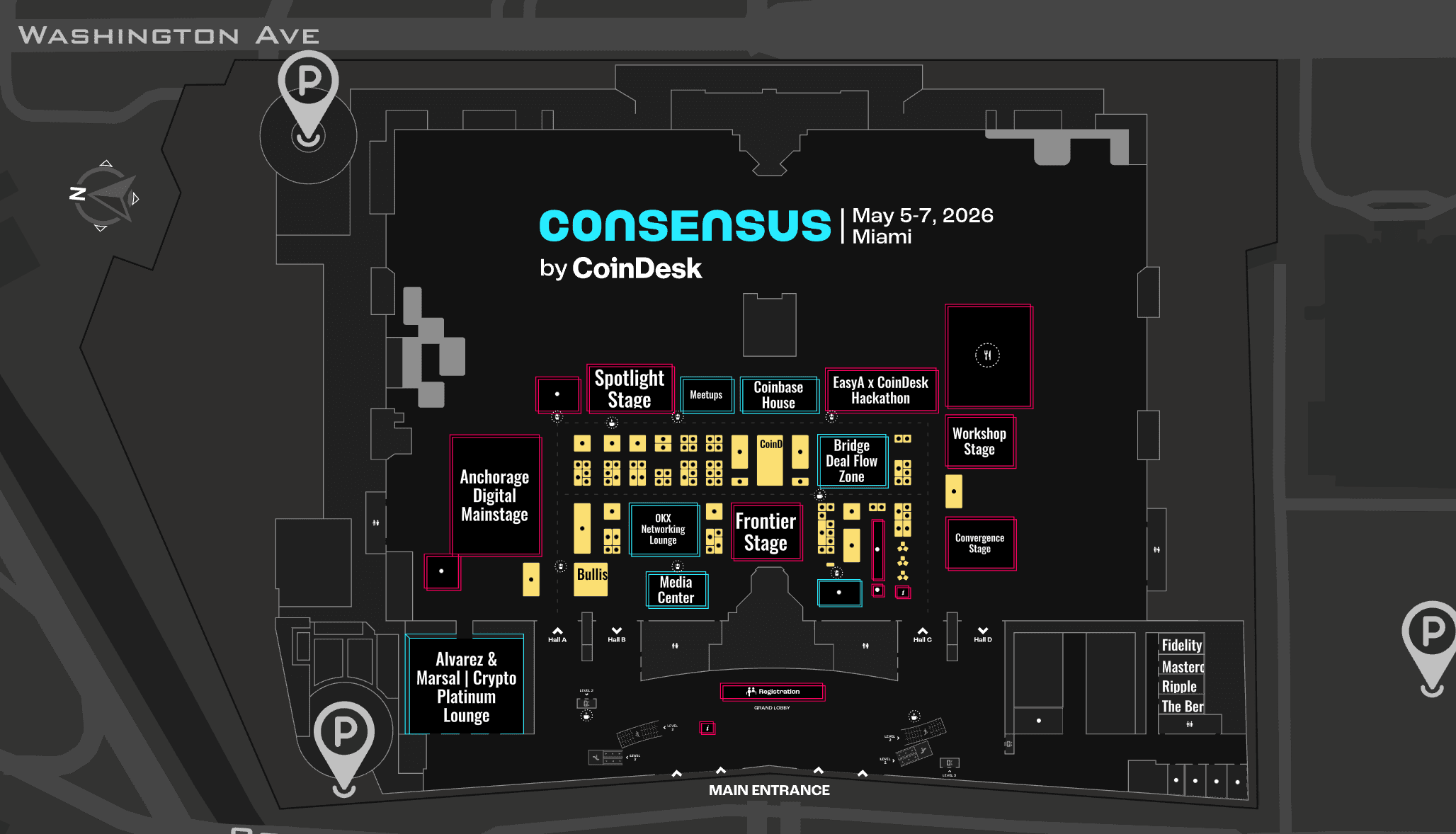
Consensus used two floors: an exhibition floor featuring 93 exhibitors, stages, and networking areas, and a separate floor with 18 sponsor meeting rooms. Attendees needed to search by company name and get to the right booth fast. Meeting rooms needed to be labeled well enough to find under time pressure. And the whole thing had to sit inside Brella natively — not as an external link that pulls people out of the app mid-conversation.
On top of that: a tight timeline. Event production compresses in the final weeks, and the floor plan needed to be mapped, integrated, and tested before the doors opened on May 5.
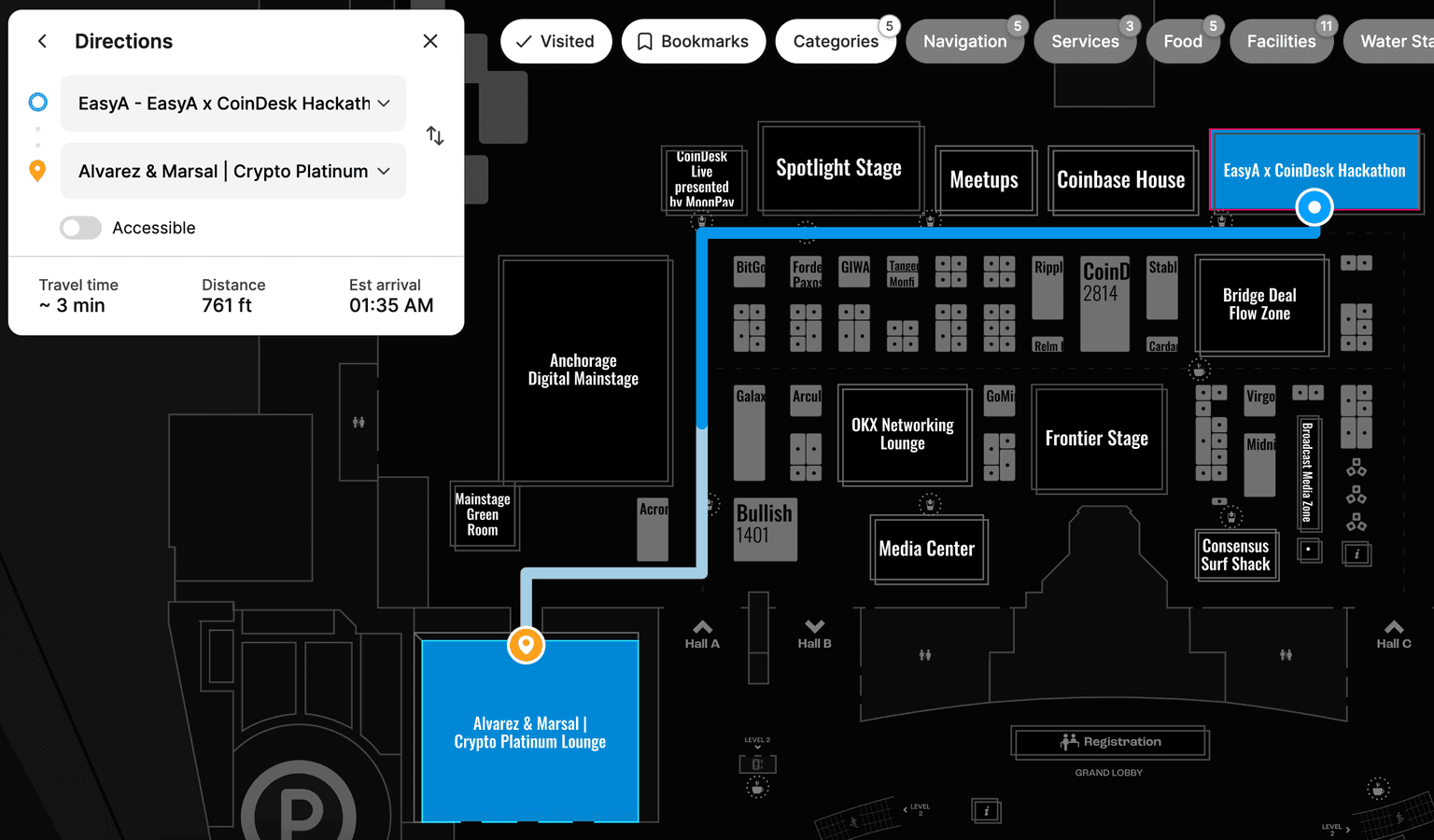
At an event where networking drives value, less time searching means more time doing business.
What the organizer wanted to achieve
The project had five clear goals:
- Deliver a searchable, mobile-friendly floor plan covering both floors of the Miami Beach Convention Center.
- Make all 93 exhibitors and 18 sponsor meeting rooms easy to find by name, category, and location.
- Power interactive touchscreen kiosks at information desks, so brand ambassadors and attendees could quickly find exhibitors, meeting rooms, and other key locations.
- Embed the map directly within the Brella app so attendees didn't need to switch to a separate tool.
- Keep the map current through the event, with updates applied as needed.
The floor plan supported more than attendee navigation. It improved exhibitor discoverability and sponsor visibility, while also giving brand ambassadors at the information desks an intuitive tool to help attendees find their way around the venue.
ExpoFP's solution
ExpoFP delivered the interactive floor plan under the PRO package, which covers unlimited buildings and floors — the two-floor layout was included at no additional cost.
The delivered scope included:
- Interactive floor plan for the Miami Beach Convention Center — two floors fully mapped
- Exhibition hall with 93 exhibitor booths, numbered and labeled
- Conference floor with 18 sponsor meeting rooms and session area navigation
- Interactive touchscreen kiosk experience for information desks
- Searchable exhibitor directory with filtering by name and category
- Sponsor and exhibitor visibility layer
- Full integration with the Brella attendee app via ExpoFP integration codes
A two-floor interactive floor plan, covering 93 exhibitors and 18 sponsor meeting rooms, embedded natively in the Brella event app — accessible to 15,000 attendees from day one.
How the project was delivered
Brella placed the order. CoinDesk provided the venue files, booth data, and branding. The build ran in four stages:
1. Setup
ExpoFP confirmed the PRO package with the two-floor structure, and aligned on branding and color scheme with the CoinDesk team.
2. Mapping
The Convention Center layout was built from venue files, with booth numbers and sizes applied and the navigation hierarchy configured across both floors.
3. Integration
CoinDesk requested the integration codes, and Brella's team synced the exhibitor data from their platform and published the map in the app.
4. Launch and support
The map went live, with updates pushed as needed before the event.
What the numbers show
More than 3,100 of the event's 15,000 attendees actively used the floor plan across the three event days (May 5–7) — roughly 20% of total attendance, at an event where most people already had their schedules planned.
Views ran well ahead of loads across the three days, which means people came back to the map more than once — not just a quick check on the way in, but returning when they needed to find something specific. That's sustained engagement rather than a one-time glance.
The map required no separate login or download. Because it lived inside the Brella app attendees were already using, navigation became part of the existing event experience rather than a separate tool they had to discover.
Why this case matters for ExpoFP prospects
This case is a useful reference for:
- Large-scale conference and expo organizers with 10,000+ attendees
- Events on Brella or similar platforms looking for native floor plan integration
- Organizers in fintech, blockchain, or technology sectors planning flagship events
- Event tech partners evaluating ExpoFP as a floor plan layer for their platform
- Teams that need a fast and managed setup
It shows that ExpoFP PRO can support one of the world's most prominent crypto conferences — delivered through a partner, embedded in the attendee app, and actively used at scale.
Final takeaway
Floor plans tend to be the last thing on the production list. They get finalized when most other logistics are already locked. That's fine — they don't need to be first. But they do need to be ready, accurate, and actually usable when the event opens. Consensus Miami showed what that looks like in practice: a searchable floor plan available through both the attendee app and the onsite touchscreen kiosks the moment the doors opened.